Explain Term vs Whole Life Insurance - Pros, Cons, and Which is Best for You


Akil Badi is the founder and lead author at PolicyIdea. He writes insurance explainers, policy comparison guides, and consumer-focused finance content.
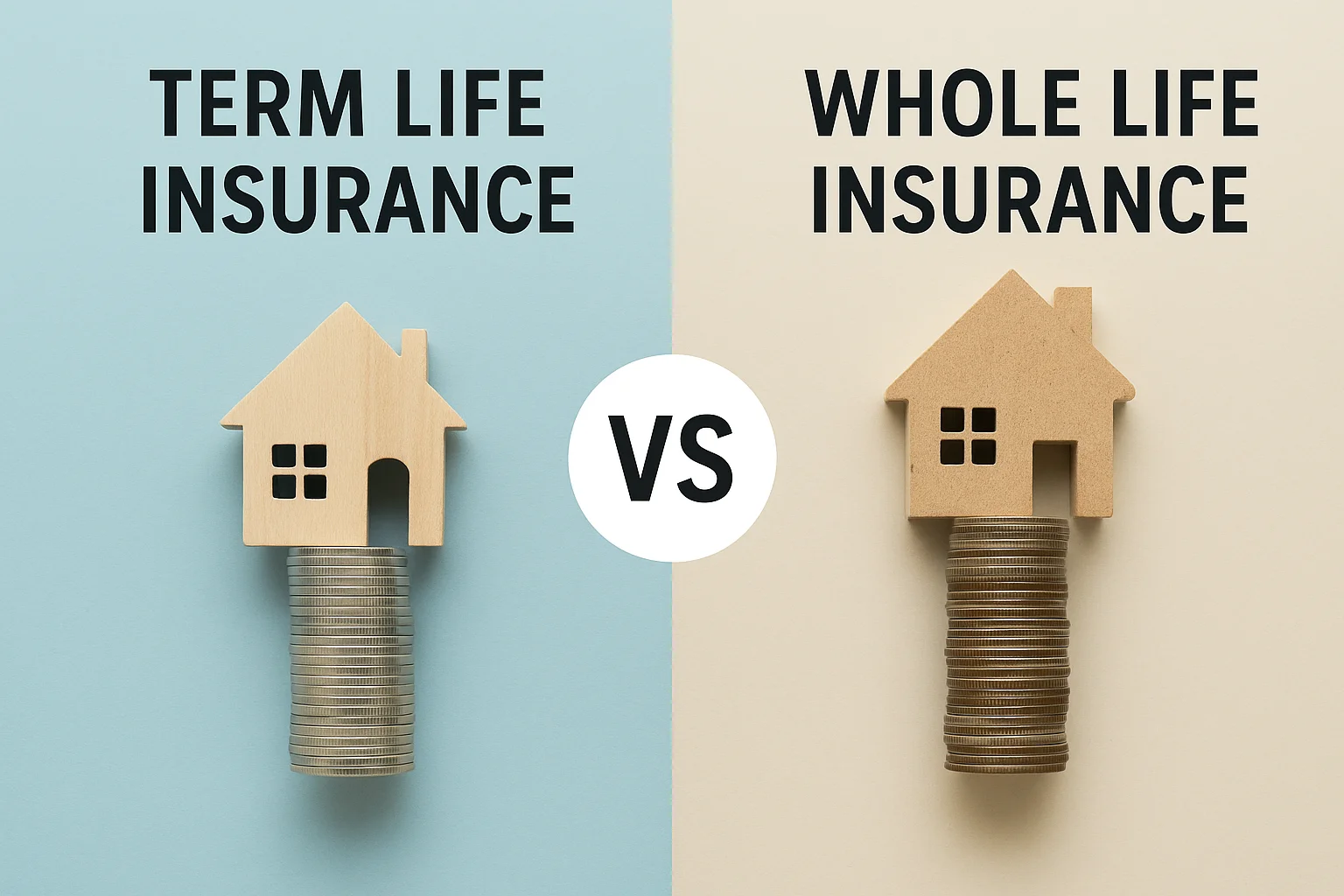
When it comes to life insurance, two of the most commonly debated options are term and whole life insurance. While both offer a financial safety net to your beneficiaries, they function in significantly different ways. This guide explains the core differences, benefits, drawbacks, and real-world applications of each, so you can make a well-informed decision.
Term life insurance is a type of life insurance that provides coverage for a specific period, usually 10, 20, or 30 years. If the policyholder dies within this term, the insurance company pays a death benefit to the beneficiaries. If the term expires while the insured is still alive, there is no payout.
John, age 35, buys a 20-year term life insurance policy with a $500,000 death benefit. He pays $30/month. If John dies within the next 20 years, his family receives $500,000. If he outlives the term, the policy ends with no payout.
Whole life insurance is a type of permanent life insurance that remains active for your entire lifetime, as long as premiums are paid. Unlike term insurance, whole life includes a savings component known as cash value, which grows over time and can be borrowed against or withdrawn.
Mary, age 35, purchases a whole life policy with a $500,000 death benefit. Her monthly premium is $400. Over time, her policy accumulates cash value, which she can borrow to pay for emergencies or retirement.
| Feature | Term Life Insurance | Whole Life Insurance |
|---|---|---|
| Coverage Duration | 10–30 years | Lifetime |
| Premium Cost | Lower | Higher |
| Cash Value | None | Yes |
| Complexity | Simple | More complex |
| Policy Loans | Not available | Available |
| Best For | Temporary coverage needs | Lifetime financial planning |
Here is a real-world comparison of monthly premium costs between term and whole life insurance for a healthy, non-smoking 35-year-old male and female purchasing $500,000 in coverage:
| Policy Type | Male (Monthly) | Female (Monthly) |
|---|---|---|
| Term Life (20 years) | $30–$40 | $25–$35 |
| Whole Life | $400–$500 | $350–$450 |
Insight: Whole life insurance is typically 10–15x more expensive than term insurance. This cost difference plays a major role in most people’s decision-making.
As you age, term life premiums increase drastically if you try to renew. Whole life, on the other hand, locks in your rate at the beginning, regardless of age or health changes later.
Use an online insurance calculator or speak with a certified financial planner to understand the long-term cost impact of each option based on your age and health profile.
Choosing between term and whole life insurance depends largely on your age, financial goals, dependents, and risk tolerance. Let’s walk through scenarios to help clarify which might be best suited to your situation.
| Scenario | Recommended Insurance Type |
|---|---|
| Young parents with kids under 10 | Term Life |
| Single income earners supporting elderly parents | Term Life |
| Business owners needing lifelong coverage | Whole Life |
| High-income professionals looking for tax-deferred savings | Whole Life |
| People with serious health concerns later in life | Whole Life (if already secured earlier) |
Truth: While it builds cash value, the returns may not match those from other investment avenues like mutual funds or ETFs. It’s not always the best financial growth vehicle.
Truth: It’s like car insurance — you’re paying for protection, not an investment. Its purpose is income replacement, not asset building.
Truth: Many insurers offer the ability to convert term policies into permanent ones, often without a medical exam, within a specific window.
Truth: The younger and healthier you are when you apply, the lower your premiums. Life insurance can be a smart financial move even in your 20s.
Truth: Employer-provided group life insurance is often limited (1x–2x salary). If you change jobs, you may lose coverage. A personal policy offers more flexibility and security.
Both term and whole life insurance serve distinct purposes. If you're looking for cost-effective protection during your working years, term life insurance offers excellent value. However, if your goal is to create long-term financial security, preserve wealth, or invest in a policy with cash value, whole life insurance may be a better fit.
Ultimately, the best life insurance policy is the one that aligns with your goals, your financial situation, and your loved ones’ future needs.
Yes, many people layer their policies — using term for high coverage during working years and a smaller whole life policy for lifetime needs.
Most policies allow conversion without a medical exam within the first 5–10 years. Check with your insurer about your conversion window and terms.
You’ll typically receive the accumulated cash value (minus fees or penalties), but the death benefit will be voided.
No. Term life has no cash value and cannot be cashed out. It’s a “pure” insurance product.
In most cases, life insurance death benefits are paid tax-free to beneficiaries. However, large estates may trigger estate taxes — consult a tax advisor.
“At 32, I purchased a 20-year term life insurance policy for $25/month. It gave me peace of mind while raising two kids. Now that I'm 52, I’m converting a portion into whole life so I can leave something behind. It’s been the best of both worlds.”
Before purchasing any life insurance product, always:
Your family’s financial safety net starts with the right decision today.
Last updated: March 30, 2026
Reviewed by: Akil Badi
Comments are moderated to reduce spam and off-topic submissions.
No approved comments yet. New submissions appear only after moderation.





![Find the Best Home Insurance Quotes in Massachusetts [2025 Guide]](https://policyidea.com/storage/uploads/1746447347.webp)



Community Feedback